
Most companies don’t outgrow ambition. They outgrow their structure.
Restructures, new teams, TUPE and the workforce plan that ought to come first. Two decades of it, on leadership teams in banking, IT consulting and charities. You get me, not a junior.
- Senior-level advice, no juniors
- Clear, jargon-free reporting
- Sector specialist
- Confidential & discreet
Regulated, qualified and accountable
- Chartered Fellow CIPD, Prince2, Scrum Master, ITIL
- CIPD qualified
- Employment law trained
- Professional body member
- Professional indemnity insured
- Public liability insurance
- Fully insured
- Accredited & fully insured
- NDA as standard
- Confidential & discreet
- Fixed fee, no surprise invoices
- Deliverables agreed up front
- Satisfaction guarantee
- Aftercare support included
Where PENRIGHT Consulting makes the difference
How we work with clients, what each engagement covers and where we add most value.

Workforce planning
The headcount question answered properly: what your growth plan actually needs in people, skills and cost, and where today’s team leaves you exposed.
Read more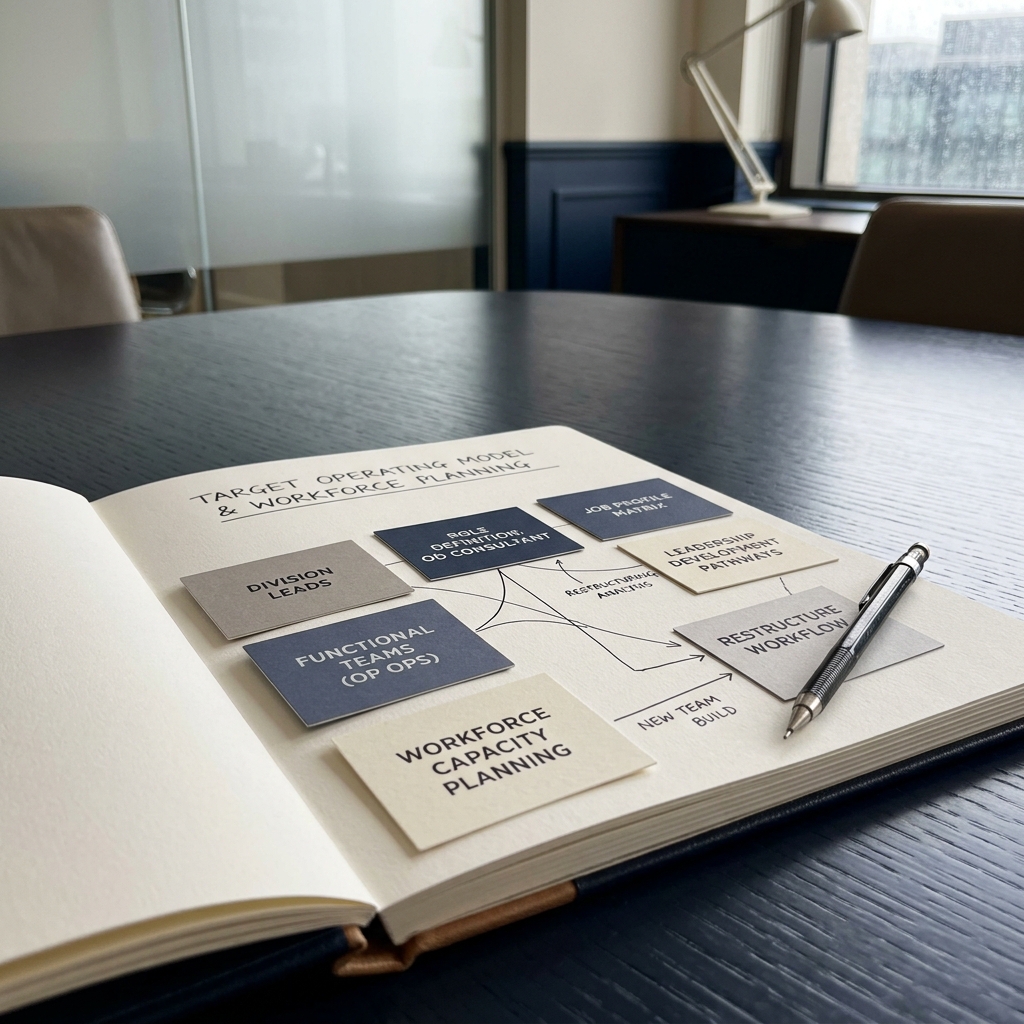
Organisational design and target operating models
Spans, layers, decision rights and who genuinely owns what. Structure designed around the work the business has to do, not around whoever happens to be in post.
Read more
Restructures, redundancy and TUPE
Consultation run properly, timelines that hold, and managers who know exactly what to say in the room. The legal process and the human one, handled together.
Read more
Leadership and line management development
One-to-one coaching for leaders carrying a reshaped team, and practical grounding for the managers beneath them in the parts of the job nobody trained them for.
Read more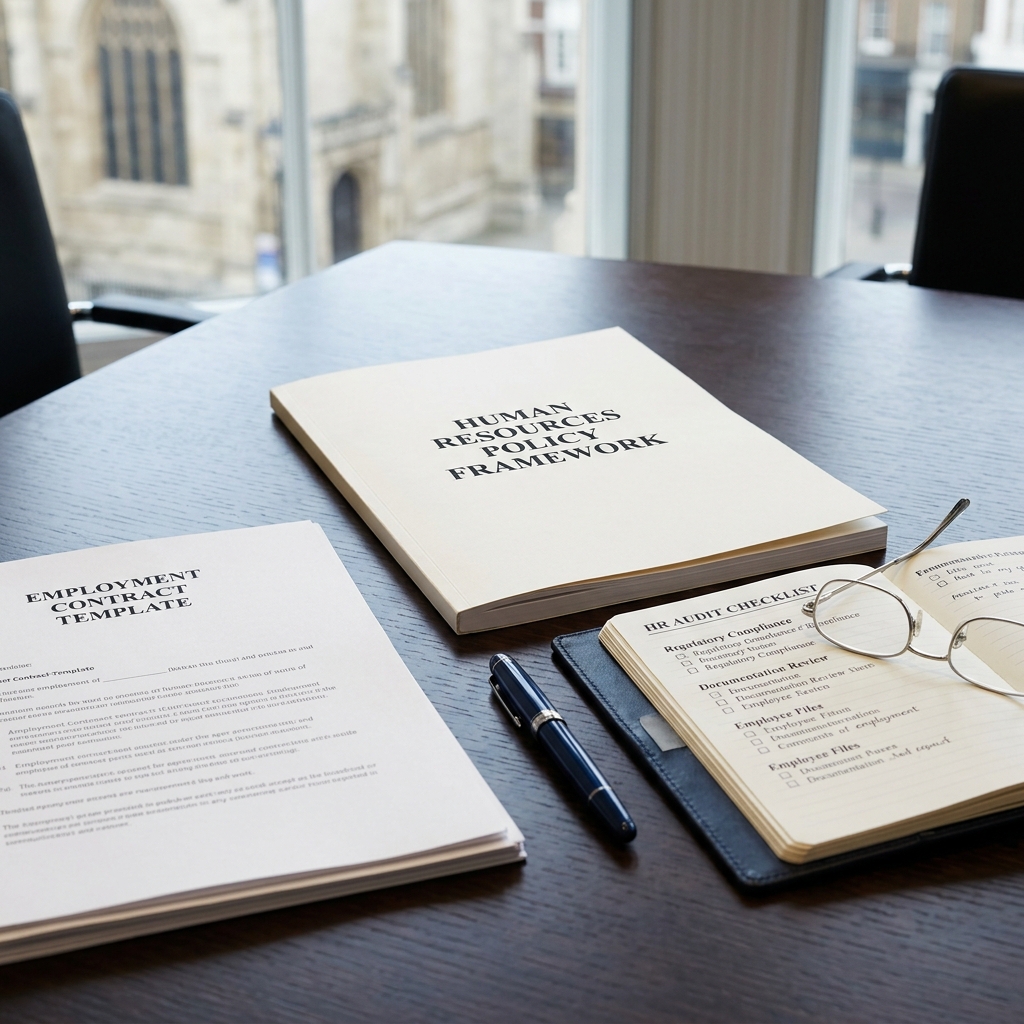
Policy, contracts and HR audit
The paperwork your structure sits on: contracts, handbook, and policies managers can actually follow, plus an honest audit of what is missing before it costs you.
Read more
Retained people partnering
A senior HR head on call through the months either side of a change programme. Board papers, escalations, hiring and reward calls, and the awkward decisions.
Read more
Two careers, one view of how organisations really work
I have spent twenty years inside the machine rather than commenting on it: HSBC, IT consulting, Investors in People and the charity sector. I sat on leadership teams, held governance, rebuilt People functions that had stopped working, and at my largest ran teams of up to 40 HR people alongside 40 in IT. Running both sides taught me what most HR advice misses: how systems, data and people decisions are wired together.

Six reasons the work holds up
The IT side and the HR side
Forty IT people and forty HR people once reported to me. Workforce plans that ignore systems, data and delivery cadence come apart by month three. Mine account for both.
Chartered Fellowship, on your engagement
Chartered Fellow is the CIPD’s most senior grade, and the person holding it is the person in your boardroom. No account manager fronting the work, no researcher drafting your restructure behind the scenes.
Priced per engagement, scoped in writing
Name every deliverable before the work starts and scope creep becomes mine to manage rather than a line on a final invoice you were not expecting. Fixed fee, agreed up front.
Built for fintech pace
Prince2, Scrum Master and ITIL sit behind the HR credentials. Sprints, roadmaps and stand-ups are how fast-moving finance and technology businesses run, so that is how the work lands.
Discretion before documents
An NDA is signed before the first file changes hands. Redundancy and restructure plans leak easily, and the damage falls on people who have not yet been told.
A straight answer on whether you need me
Sometimes the assessment shows the foundations are already sound. If your issue is one manager conversation rather than a redesign, I will tell you that on the call.
A straightforward way to start working together
The maturity assessment
Eight to ten questions, scored one to five, on how your people strategy actually performs. The answers plot as a chart: weak foundations sit at the centre, strong practice pushes.
The discovery call
We read the chart together. Where the gaps sit, what is driving them, and whether the work you think you need is the work you actually need.
Roadmap, then delivery
A written plan with objectives, timelines and named accountabilities, delivered in sprints you can track. Aftercare stays in place once the new structure goes live.
Where else clients bring us in
If your situation sits slightly outside this, it is still worth a conversation.
Employee relations casework
Disciplinaries, grievances, appeals and exits that need a steady hand and a clean paper trail. Handled discreetly, with the manager coached through it rather than replaced in the meeting.
Hiring and selection support
Job profiles, scorecards and interview structure, so a shortlist is judged against the role you designed rather than against whoever interviewed best on the day.
Manager training and workshops
Sessions built around your live situations: absence, performance, difficult conversations, the new structure. Delivered on site or remotely, with materials your managers keep and actually use afterwards.
Inclusion and equity, evidenced
EDI grounded in data and job design rather than posters. Pay and progression patterns examined, recruitment practice tightened, and policies written to survive contact with the organisation chart.
People operations that hold up
When HR processes creak, the fix is usually workflow rather than another policy. Onboarding, absence, approvals and reporting redesigned so the team stops firefighting, with governance you can show a board.
Questions clients ask before we start
What happens before and during the first call?
The assessment comes first, so we are not spending the call on background. Your scores reach me before we speak, and the conversation opens on the two or three areas that scored lowest: what is causing them, what fixing them involves, and whether that is a project or a single conversation with one manager.
How much does an engagement cost?
There’s no rate card, because rebuilding an operating model and refreshing a handbook are not the same job. After the discovery call you get a written proposal: defined deliverables, a fixed fee, and the invoicing schedule stated up front. Additional work is quoted separately rather than absorbed quietly.
Can you support a London or South East business from Minehead?
Yes. London and the South East are the patch, and the practice runs hybrid by design. Planning, design and documentation are done remotely; I travel in for the work that needs a room, such as leadership workshops, consultation and exec sessions. On-site days sit in the roadmap from the start.
Are you qualified to run a redundancy or TUPE process?
Chartered Fellow CIPD and employment law trained, with twenty years of these processes behind me: consultation timelines, selection criteria, scripts, documentation, appeals. I am not a solicitor, and where a matter turns genuinely contentious I’ll say so and tell you to take legal advice rather than improvise.
How confidential is this before we announce anything internally?
An NDA is signed as standard before any detail changes hands. Early restructure and redundancy thinking stays between us until you choose to communicate it, and nothing appears as a case note or a LinkedIn post without your written agreement.
Do you only work with fintech companies?
No. Fintech is simply where the method gets tested hardest: headcount that doubles, priorities that move every quarter, structures that never catch up, so plans have to be built in short agile cycles rather than annual ones. The same discipline holds in banking, IT consulting, charities and professional services, where my own career was spent.
The practice is new; the twenty years behind it are not. Recommendations arrive through LinkedIn and go up here as they come, unedited. In the meantime, judge the thinking: take the assessment and see what the first call is worth.
Clients we support across London, South East
The work sits with London and South East businesses growing faster than their structure: fintech and financial services in the City, technology firms along the Thames Valley, charities and professional practices. Run from Minehead, on site when the room matters, otherwise remote.
Working with clients in London
We support a number of London businesses, in person or over video, whichever suits.
Who we work withWorking with clients in the South East
South East clients make up a steady part of our work, so the local picture is familiar.
Who we work with
Start with the assessment, not a sales pitch
Eight to ten questions and one chart showing where your people strategy is load-bearing and where it is running on goodwill. Bring it to a discovery call and we will read it together.
Call 07795013000